

If you sell online — whether you run a D2C brand, a Shopify store, or a manufacturing business that’s moved to direct sales — you’ve probably noticed something changing in how people shop. Fewer people type “best running shoes for flat feet” into Google and scroll through ten blue links anymore. Instead, they ask ChatGPT, Perplexity, or Google’s AI Overview, and they get a direct answer — sometimes with a specific product recommendation baked right in.
This shift matters for one simple reason: if your product isn’t the one AI mentions, you don’t get the click. And right now, most e-commerce sites aren’t built in a way that AI systems can actually read, understand, or trust enough to recommend.
Will AI Search Reduce E-commerce Traffic?
Short answer: for some queries, yes — but not in the way most store owners fear.
AI Overviews and chat-based search tools are increasingly answering broad, informational queries directly — things like “what’s the difference between memory foam and latex pillows” or “is bamboo fabric good for summer.” These used to send traffic to blog posts and buying guides. Now, AI often answers the question itself, and the click only happens if the source gets cited.
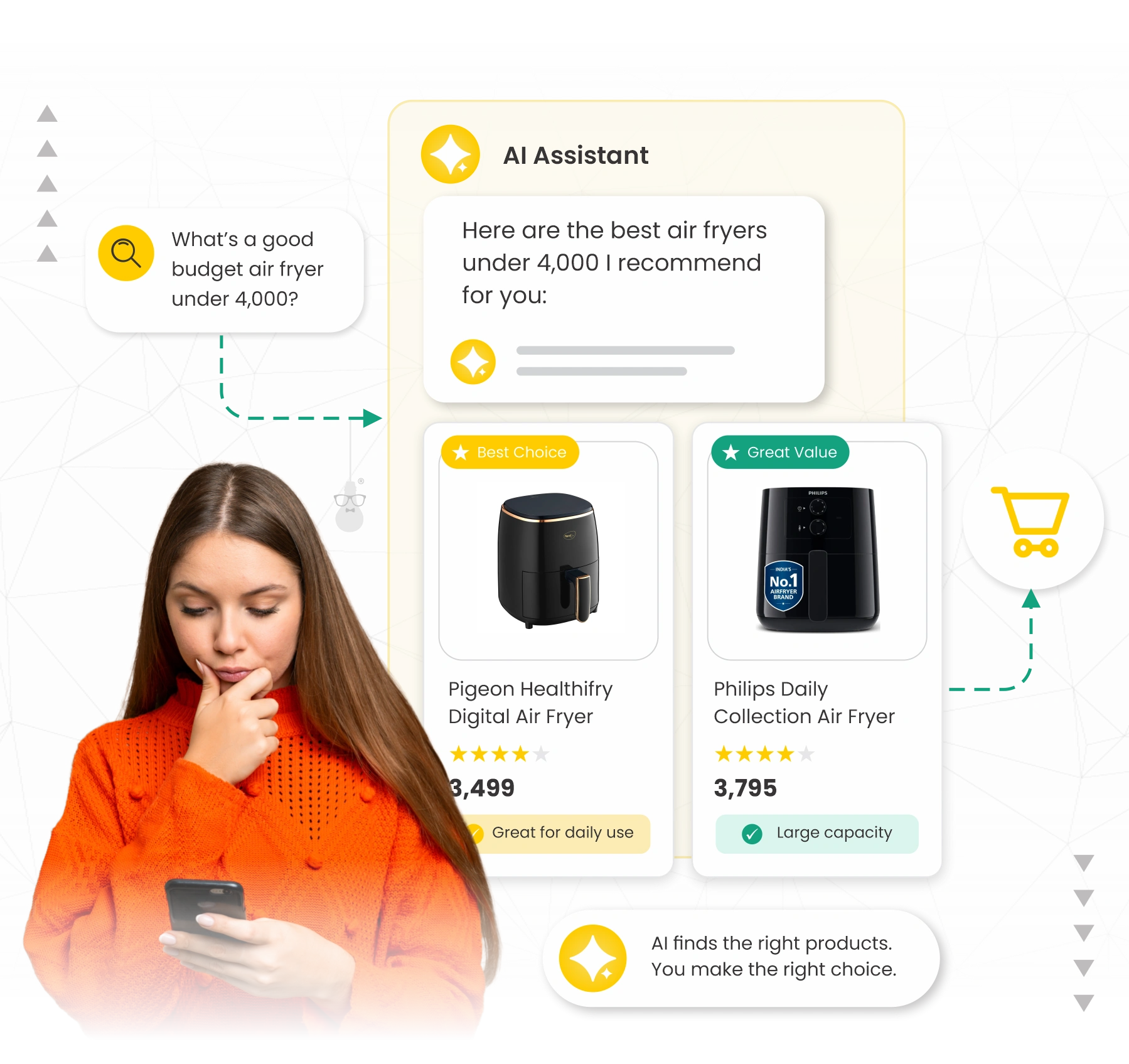
But here’s the part that doesn’t get talked about enough: AI search doesn’t just summarize — it recommends. When someone asks “what’s a good budget air fryer under ₹4,000,” an AI assistant doesn’t just explain what air fryers are. It names specific products. That’s a transactional moment, and if your product page is structured well enough to be pulled into that answer, you get found by someone who’s already decided to buy.
So the honest picture is: top-of-funnel “what is X” traffic may shrink. But bottom-of-funnel “which one should I buy” traffic is becoming more AI-mediated too — and that’s where the real opportunity sits for product pages.
How Can Product Pages Rank in
AI Answers?
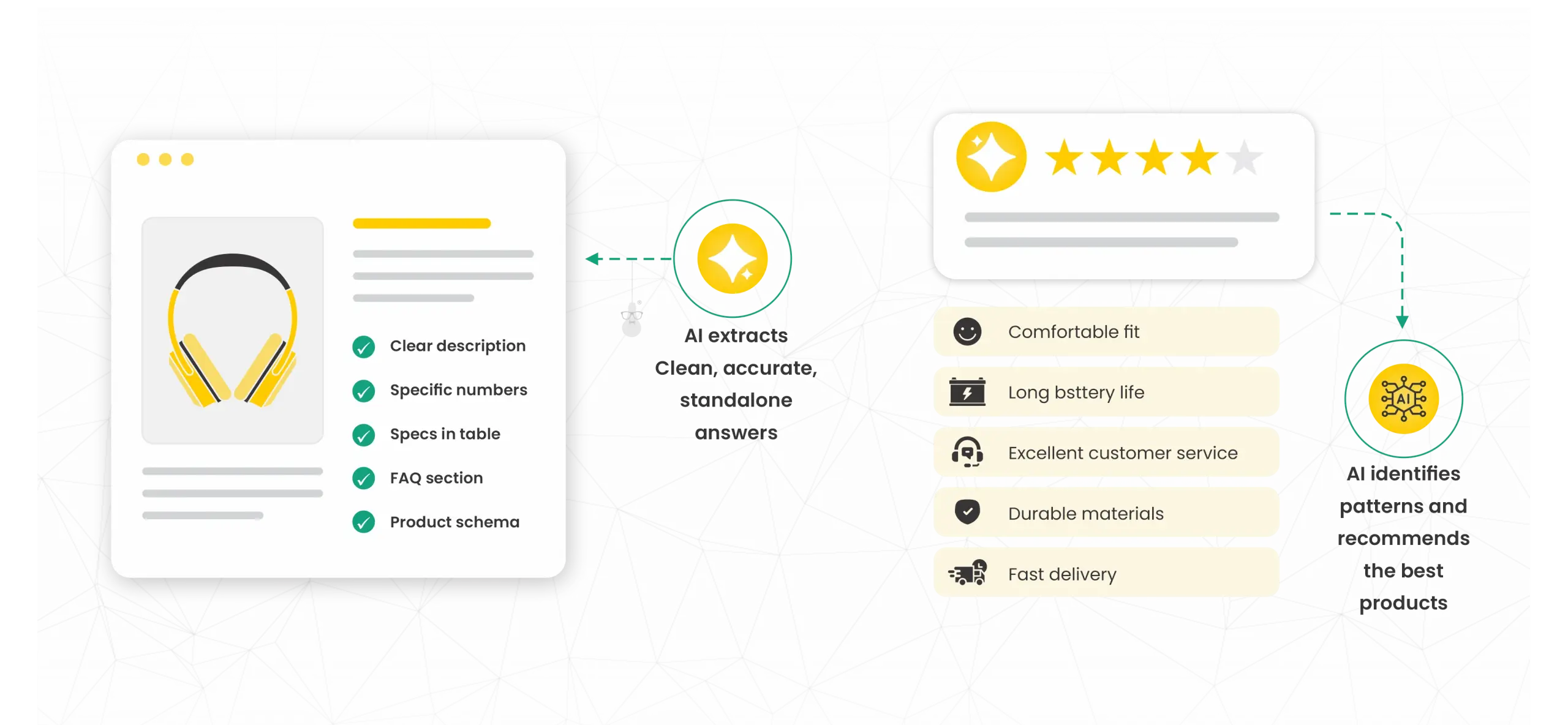
AI prefers pages that explain products clearly and answer customer questions. AI search adds a layer: your page also needs to be extractable — meaning an AI system can pull a clean, accurate, standalone answer from it without needing the rest of the page for context.
Here’s what that means practically for a product page:
- Lead with a clear, factual product description.
- Use specific numbers, not adjectives.
- Structure specs as a table, not a paragraph.
- Add an FAQ section per product.
- Use Product schema markup
How Important Are Reviews and Comparisons?
If hundreds of customers mention:
- Comfortable fit
- Long battery life
- Excellent customer service
- Durable materials
- Fast delivery
What Product Content Works Best for AI?
Comparison-style content —
AI loves comparisons because they’re inherently structured and decision-oriented. If your website contains honest comparison articles, AI has a reliable source to reference.