AI SEO for E-commerce

If you sell online — whether you run a D2C brand, a Shopify store, or a manufacturing business that’s moved to direct sales — you’ve probably noticed something changing in how people shop. Fewer people type “best running shoes for flat feet” into Google and scroll through ten blue links anymore. Instead, they ask ChatGPT, Perplexity, or Google’s AI Overview, and they get a direct answer — sometimes with a specific product recommendation baked right in.

This shift matters for one simple reason: if your product isn’t the one AI mentions, you don’t get the click. And right now, most e-commerce sites aren’t built in a way that AI systems can actually read, understand, or trust enough to recommend.

This isn’t about abandoning traditional SEO. It’s about adding a layer on top of it — making sure your product pages, reviews, and comparison content are structured in a way that AI tools can extract and cite. Let’s go through what that actually looks like for an online store.

Will AI Search Reduce E-commerce Traffic?

Short answer: for some queries, yes — but not in the way most store owners fear.

AI Overviews and chat-based search tools are increasingly answering broad, informational queries directly — things like “what’s the difference between memory foam and latex pillows” or “is bamboo fabric good for summer.” These used to send traffic to blog posts and buying guides. Now, AI often answers the question itself, and the click only happens if the source gets cited.

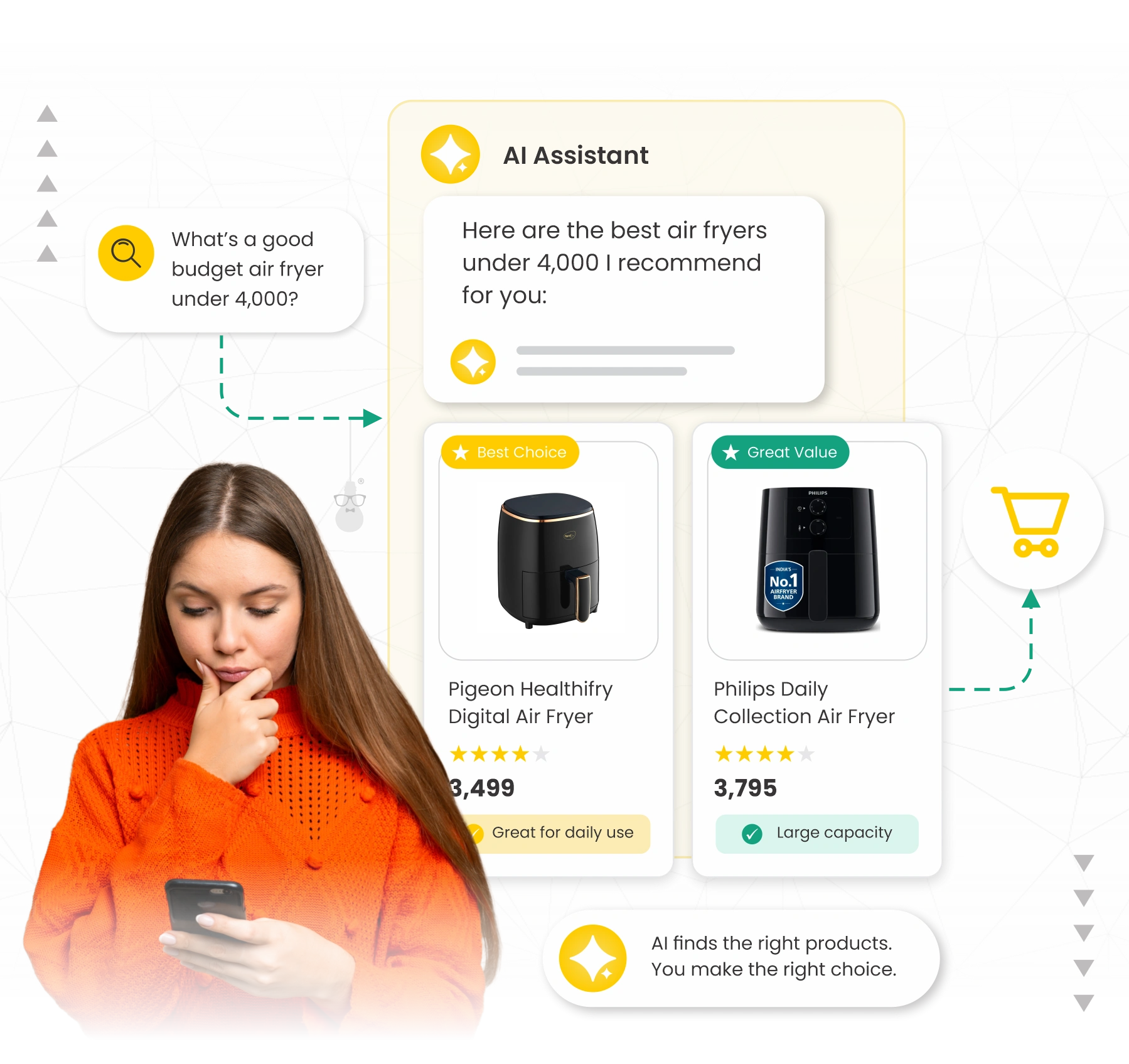
But here’s the part that doesn’t get talked about enough: AI search doesn’t just summarize — it recommends. When someone asks “what’s a good budget air fryer under ₹4,000,” an AI assistant doesn’t just explain what air fryers are. It names specific products. That’s a transactional moment, and if your product page is structured well enough to be pulled into that answer, you get found by someone who’s already decided to buy.

So the honest picture is: top-of-funnel “what is X” traffic may shrink. But bottom-of-funnel “which one should I buy” traffic is becoming more AI-mediated too — and that’s where the real opportunity sits for product pages.
How Can Product Pages Rank in
AI Answers?

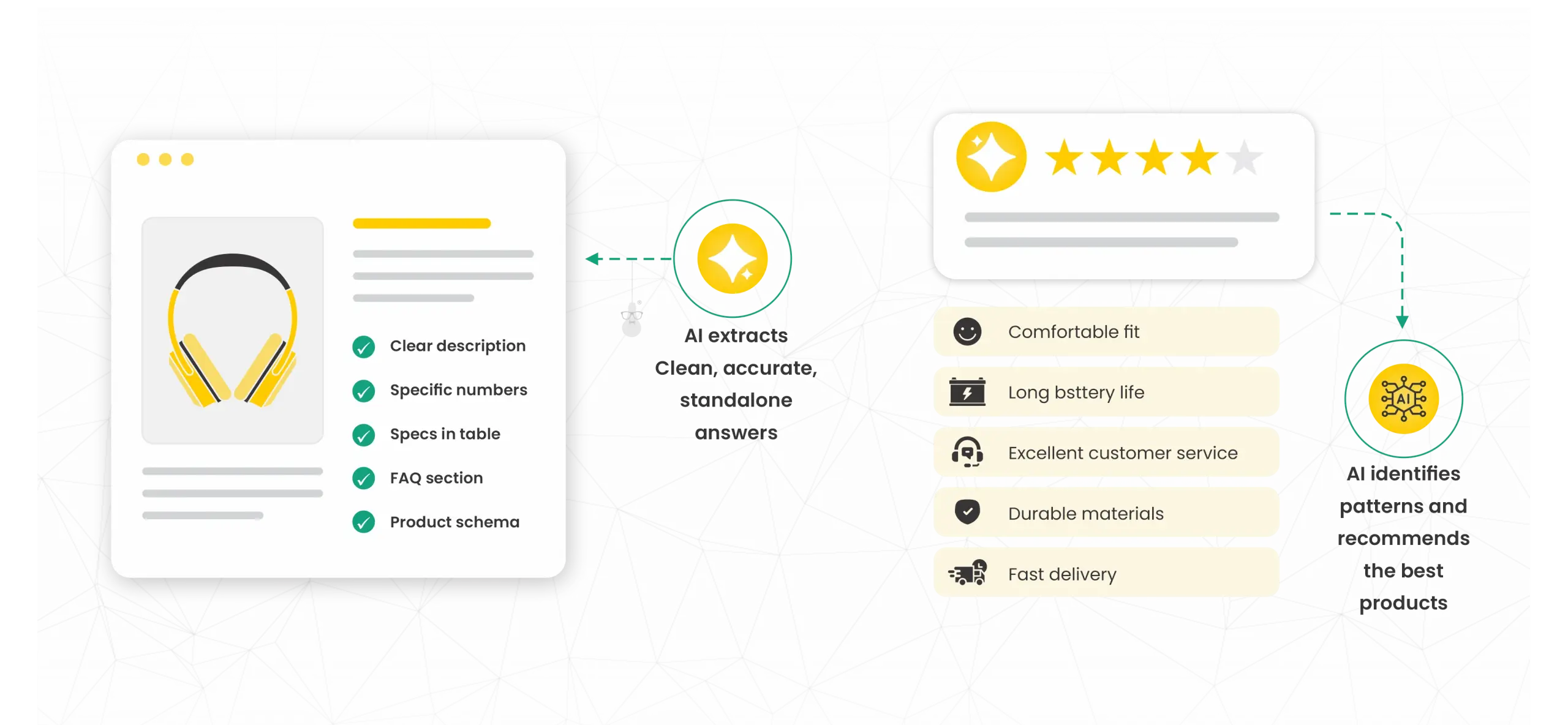
AI prefers pages that explain products clearly and answer customer questions. AI search adds a layer: your page also needs to be extractable — meaning an AI system can pull a clean, accurate, standalone answer from it without needing the rest of the page for context.

Here’s what that means practically for a product page:

How Important Are Reviews and Comparisons?

Reviews have always influenced purchase decisions, but their importance is growing in AI search. AI doesn’t simply count how many reviews a product has. It also tries to understand what customers are saying.

If hundreds of customers mention:
AI begins identifying patterns. Those patterns help determine whether a product deserves to be recommended. Detailed reviews are particularly valuable.

What Product Content Works Best for AI?

All content can not earn an equal citation. Based on how AI search tools currently behave, here’s what tends to get pulled into answers:

Comparison-style content —

“Which is better, Product A or Product B?”

AI loves comparisons because they’re inherently structured and decision-oriented. If your website contains honest comparison articles, AI has a reliable source to reference.

Use-case specific descriptions

Break out who the product suits: "For home offices," "For gifting," "For frequent travelers." Each becomes a potential match for a specific reason.

First-person, experience-based detail

“We tested this for six weeks before adding it to our store" carries more weight than "high quality material." AI systems are increasingly weighted toward content that demonstrates real experience.

Freshness signals

A "last updated" date, current stock status, and recent review dates all tell AI systems this page reflects the current state of the product.

Conclusion

AI is changing how people discover products, but it isn’t changing what customers value. People still want trustworthy brands, honest reviews, clear product information, and confidence before making a purchase. For online stores, the goal is no longer just ranking on Google. It’s becoming a business that AI systems trust enough to recommend.
If you want to improve AI SEO for E-commerce Websites, focus on creating detailed product pages and create authority. The businesses that invest in trust and customer experience today will be the ones customers—and AI—continue to choose in the years ahead.
And if you want us to do your AI SEO for your ecommerce website, connect with us

Frequently Asked Questions

AI search may reduce traffic for simple informational queries, but businesses that provide valuable content and strong product information can still attract highly qualified buyers with stronger purchase intent.
Yes. ChatGPT can recommend products by analyzing information such as product descriptions, reviews, comparisons, and brand reputation available online.
Product pages should include detailed descriptions, specifications, FAQs, customer reviews, and clear information that helps AI understand the product and its benefits.
Buying guides, comparison articles, product FAQs, and detailed product descriptions work well because they answer customer questions and provide useful information.
Absolutely. Reviews help AI understand customer satisfaction, product quality, and real-world experiences, making them one of the strongest trust signals.
Yes. Shopify stores with strong product content, helpful articles, and positive customer reviews can appear in AI search recommendations.
No. Traditional SEO remains important. AI search builds on the same foundations, including content quality, technical SEO, and website authority.
Focus on creating helpful content, improving product pages, collecting authentic reviews, and building a trusted brand presence that customers and AI systems can rely on.