AI SEO for B2B Companies
The way B2B companies generate leads has changed significantly over the last few years. While Google remains an important source of traffic, buyers are no longer relying only on search engines, trade shows, or referrals to find the right vendors. More and more decision-makers are now using ChatGPT, Google AI Overviews, Gemini, and other AI-powered search platforms to research products and services before they make contact.
Instead of typing a few keywords into a search box, buyers are asking complete questions. They want recommendations, comparisons, and expert insights before visiting a website or scheduling a meeting. This shift is changing how businesses get discovered online and creating new opportunities for companies that are ready to adapt.

An industrial exporter might ask, “Which packaging suppliers in India have experience with European shipping standards?” A startup founder may search, “What’s the best CRM for a remote sales team?” A hospital administrator could ask, “Which automation consultants have worked with pharmaceutical manufacturers?”The businesses that appear in these AI-generated answers often become the first choices buyers explore.

This is where AI SEO for B2B Companies becomes important. It’s no longer just about ranking on Google. It’s about making sure your business can be found and trusted across the growing number of AI-powered search platforms that people use every day.

How AI Is Reshaping B2B Buying Decisions

B2B buying decisions have always involved research. Buyers compare different vendors, study products carefully, read reviews, and discuss options with multiple stakeholders before making a final decision.AI is making this process faster and easier.

Instead of opening ten browser tabs and searching for information manually, buyers can ask AI tools detailed questions and get clear answers within seconds. AI platforms summarize information from different sources and help users narrow down their options much earlier in the buying journey.
Imagine a company searching for ERP software. Instead of typing “ERP software India,” they may ask:
“Which ERP software is suitable for manufacturing companies with multiple locations?”
Or they might ask:

“Can ChatGPT recommend ERP providers known for excellent customer support?”
AI platforms analyse information available across websites, reviews, case studies, business listings, and other trusted sources before generating answers.
This means your website isn’t competing only for Google rankings anymore. It’s also competing to become a trusted source that AI platforms feel confident recommending to their users.

Businesses that clearly explain their expertise and provide useful information have a much better chance of appearing in these conversations.

Can ChatGPT Recommend Service Providers?

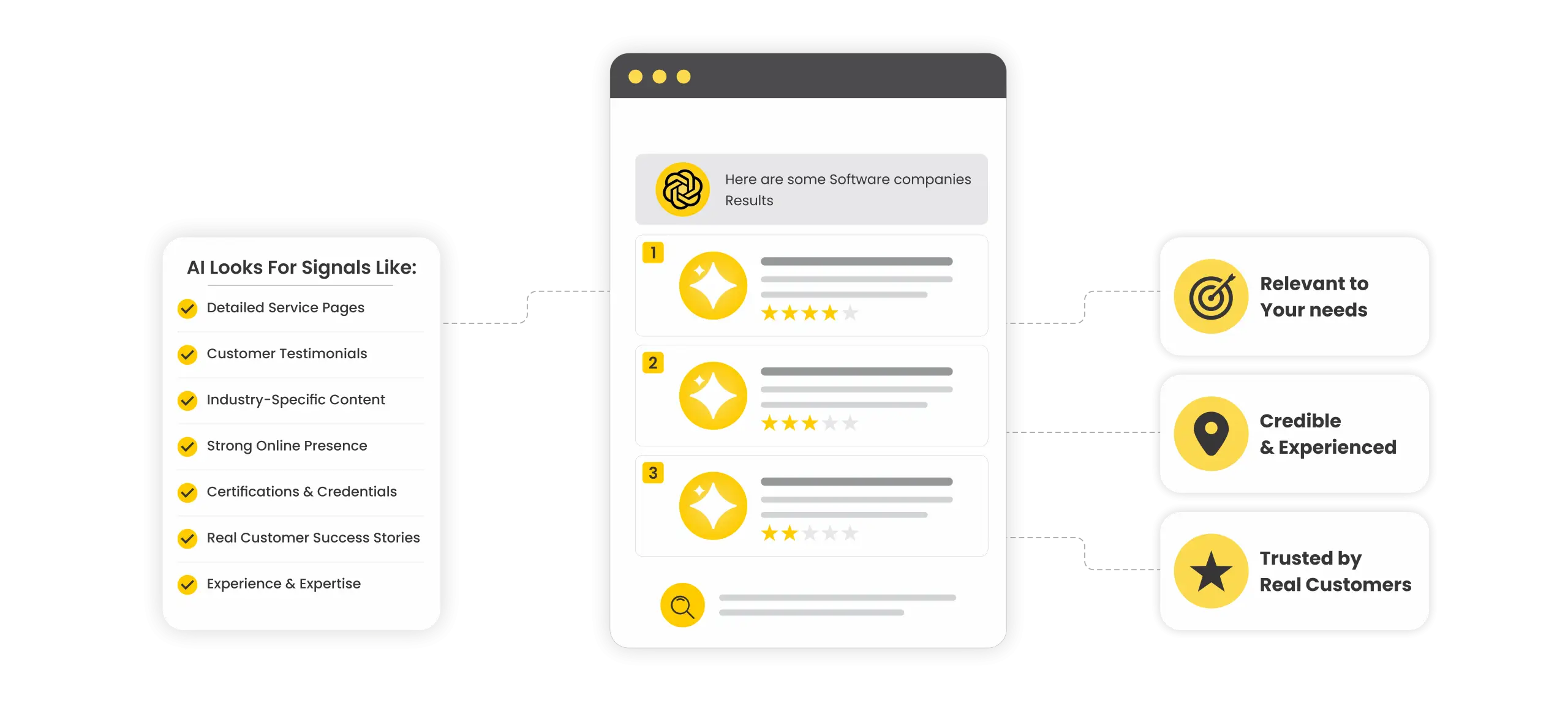
Yes, it can. ChatGPT and other AI search platforms regularly recommend consultants, software companies, manufacturers, marketing agencies, and many other B2B service providers. However, these recommendations are not random. AI systems look for signals that indicate a business is credible, experienced, and relevant to the question being asked.

For example, if someone asks:
“Which software companies specialise in CRM solutions for logistics businesses?”

AI is more likely to recommend businesses that have detailed service pages, customer testimonials, industry-specific content, and a strong online presence. 

Similarly, if a buyer searches for packaging manufacturers that work with export businesses, AI may favour companies that clearly showcase their manufacturing capabilities, certifications, and customer success stories. Businesses that rely only on generic marketing statements often struggle to stand out. AI tends to prefer companies that educate customers, answer questions clearly, and demonstrate real expertise.
What Content Helps B2B Visibility?

Take a look at many B2B websites and you’ll often find headlines like:
“We are a leading provider of innovative end-to-end solutions.”

Why Case Studies Matter More Than Ever

Case studies have always been important in B2B marketing, but they are becoming even more valuable in the age of AI search.

A good case study tells a real story. It explains the problem a customer faced, how your business approached the challenge, and what results were achieved.
This type of content helps potential customers understand your experience in a practical way. It also gives AI more confidence in your expertise.

Imagine you run an industrial packaging company and helped a client reduce shipping damage while improving packaging efficiency.
A detailed case study explaining the challenge, your solution, and the final outcome becomes powerful proof of your capabilities.

If someone asks:

“Which packaging consultants in India specialise in export packaging?”
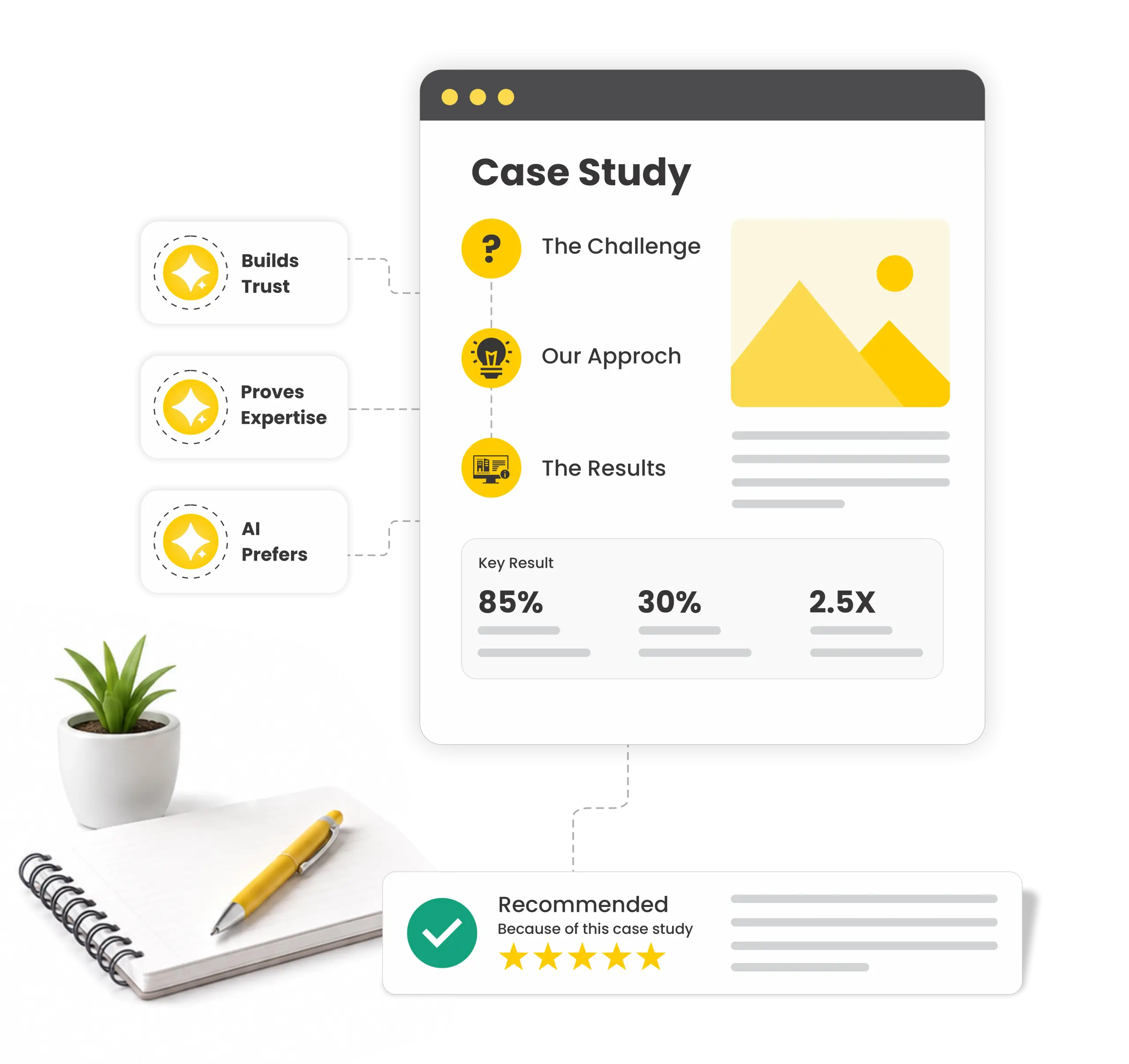
That case study helps AI understand exactly what your business does and why it deserves to be recommended.
The same principle applies to SaaS companies, consultants, and other service providers.
Real stories backed by measurable results build trust far more effectively than marketing claims.

What Trust Signals Matter Most?

Trust is becoming one of the most important factors in AI search.
AI platforms aim to provide accurate and reliable answers, so they naturally prefer businesses that have established credibility online.
Customer reviews play a major role.
AI doesn’t only look at ratings. It also looks at what customers are saying. Detailed reviews that explain how your business solved a problem or delivered results provide valuable context.
Industry recognition is also important.
Awards, certifications, professional memberships, and mentions in respected publications help establish authority and build confidence in your brand.
Consistency matters too.
Your website, social media profiles, and business listings should all contain accurate and up-to-date information. When your online presence is consistent, AI can understand and trust your business more easily.
Businesses that regularly publish helpful content and share their expertise also tend to build stronger authority over time.

The Future of B2B Lead Generation

AI search is not replacing traditional SEO or other marketing channels. Google rankings still matter, referrals are still valuable, and email marketing continues to play an important role in B2B growth.
What is changing is the way buyers research businesses. AI is becoming another important step in the buying journey, and companies that adapt early have an opportunity to build visibility before their competitors do.
The businesses that succeed in this new environment won’t necessarily be the ones with the biggest marketing budgets. They will be the companies that answer customer questions clearly, publish useful content, share real success stories, and build trust consistently across the web.
If you want to improve AI SEO for B2B Companies, focus on creating content that genuinely helps your audience and demonstrates your expertise. As AI search continues to evolve, businesses that educate, inform, and build credibility will have the best chance of being recommended—not just by search engines, but by AI itself.